
Eine Ausstellung, die dem Modehaus House of Worth gewidmet ist. Gegründet 1858 von Charles Frederick Worth, dem Wegbereiter der Haute Couture, konnte man hier der Geschichte der Haute Couture durch die Jahrzehnte folgen.
Haute Couture, wörtlich übersetzt „Hohe Schneiderkunst“, steht für die maßgeschneiderte Anfertigung von einzigartigen Kollektionen aus feinsten Materialien – die Superlative der Exklusivität, Kreativität und meisterhaftem Handwerk. Doch Haute Couture ist mehr als nur ein Begriff: Es ist ein gesetzlich geschützter Titel, der seit 1945 nur von Modehäusern geführt werden darf, die strenge Auflagen der Fédération de la Haute Couture et de la Mode (FHCM) erfüllen.

1825 – Charles Frederick Worth wird am 13. November in Lincolnshire, England, geboren. Schon früh entwickelt er ein Talent für Stoffe und Schnitttechnik, das er zunächst in London in verschiedenen Tuchgeschäften ausbaut.
1845 – Worth zieht nach Paris, dem Zentrum für Mode und Luxus, um seine Karriere als Schneider zu beginnen.
1851 – Bei der ersten Weltausstellung in London, der berühmten Great Exhibition, wird Worth für seine Entwürfe mit einer Goldmedaille ausgezeichnet. Vier Jahre später, auf der Pariser Weltausstellung 1855, präsentiert er einen schulterfreien Mantel (Manteau de cour), der ihm den ersten Preis einbringt.
1858 – Er gründet gemeinsam mit Otto Bobergh die MaisonWorth et Bobergh in der Rue de la Paix in Paris, ein Modehaus, das Maßkleidung und eigene Kollektionen kombiniert. Worth ist der erste Couturier, der Modeschauen mit lebenden Models veranstaltet, um seine Entwürfe zu präsentieren.
Er entwirft Kleidung für die wohlhabendsten Frauen Europas, darunter Kaiserin Eugénie von Frankreich und Kaiserin Elisabeth von Österreich, und macht Mode zu einer Form von Kunst und Inszenierung.
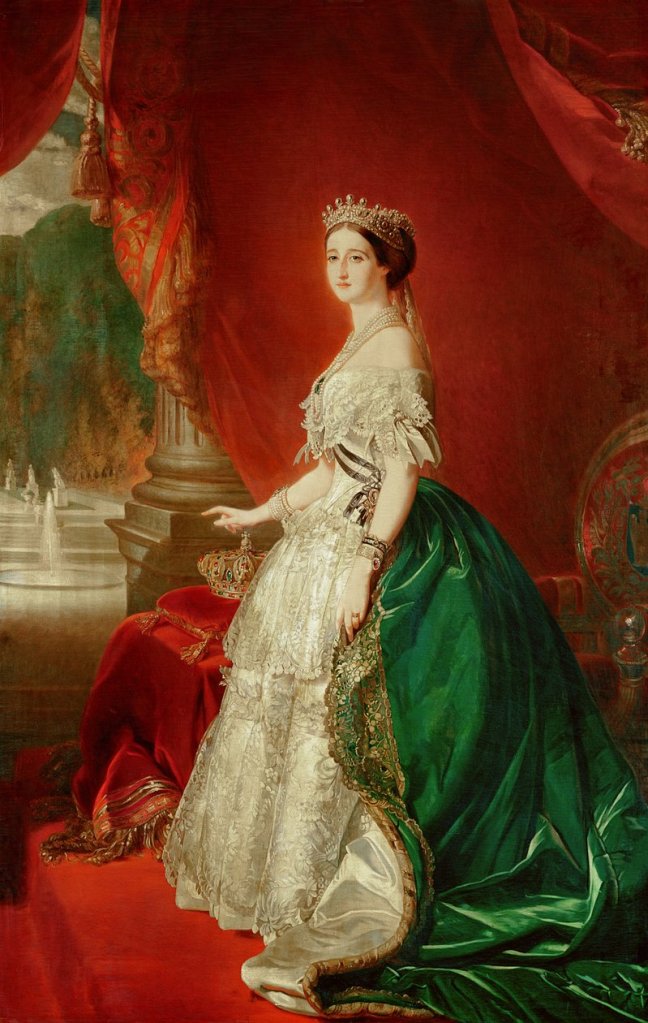
Kaiserin Eugenie von Frankreich
Franz Xaver Winterhalter, 1854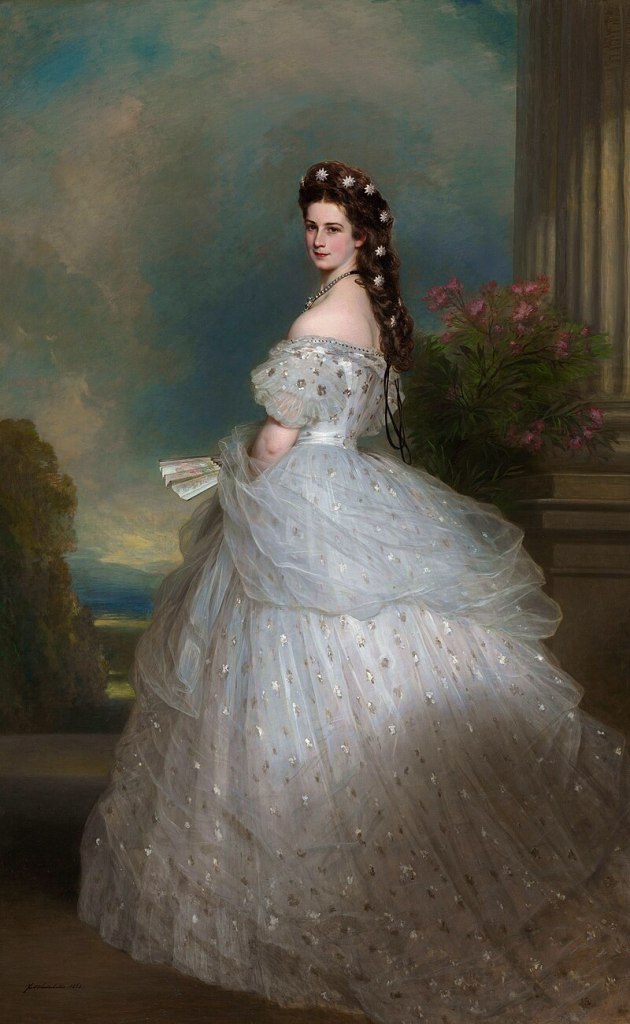
Elisabeth von Österreich
Porträt von Franz Xaver Winterhalter, 18651895 – Charles Frederick Worth stirbt am 10. März in Paris, doch sein Modehaus bleibt noch bis 1956 bestehen.
Die Ausstellung
Vom 7. Mai bis zum 7. September 2025 zeigt das Petit Palais, Musée des Beaux-Arts de la Ville de Paris, die Ausstellung „WORTH – Inventing Haute Couture“. Auf 1.100 Quadratmetern werden über 400 Werke aus Mode, Accessoires, Kunstobjekten, Malerei und Grafik präsentiert, darunter Leihgaben vom Philadelphia Museum of Art, Metropolitan Museum of Art, Victoria and Albert Museum, Palazzo Pitti sowie aus privaten Sammlungen. Um alle Aufnahmen zu sehen, klicke gerne auf den folgenden Link und besuche mein Pinterest-Profil.
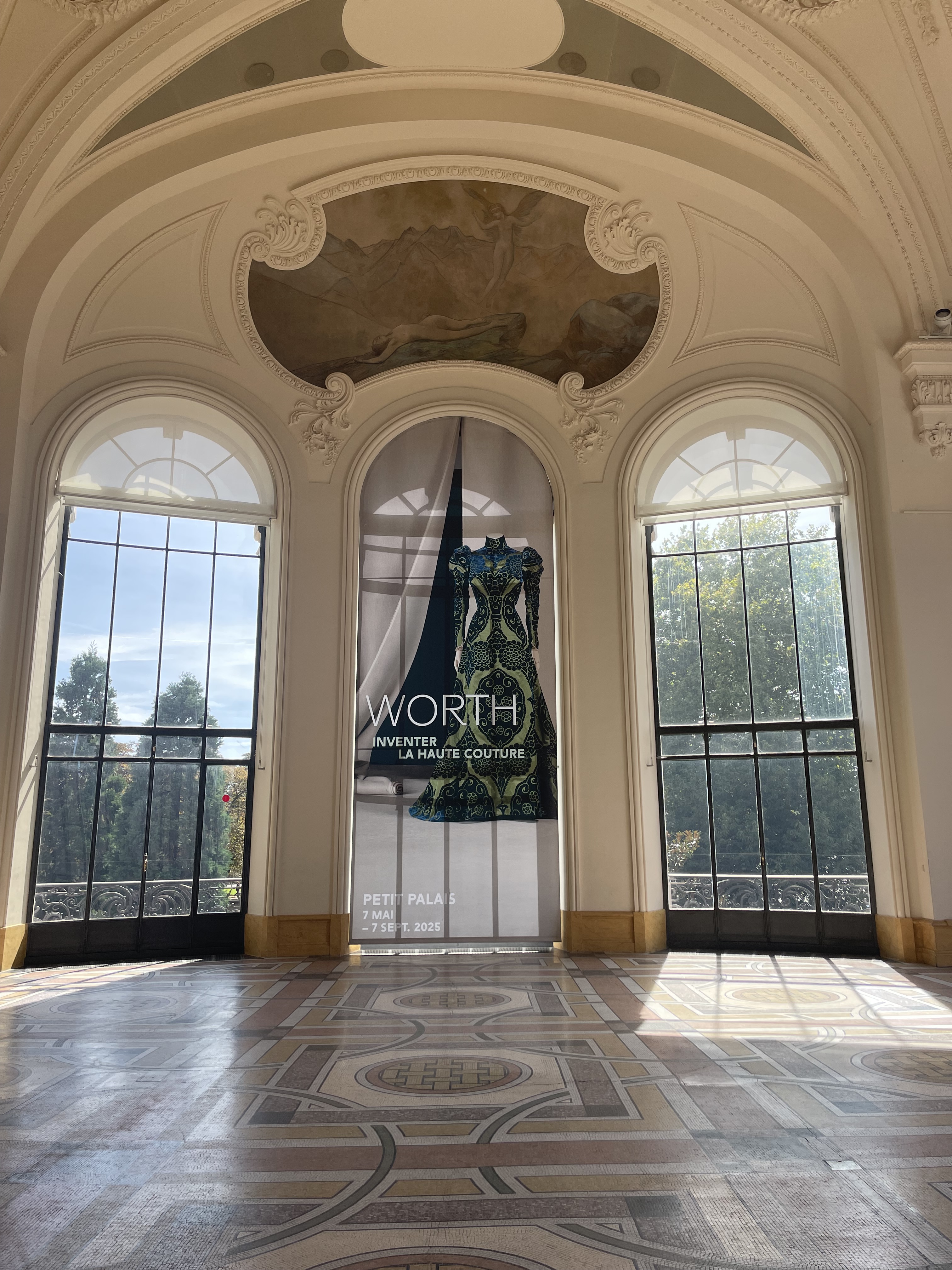
Die Gesamtkuration der Ausstellung übernehmen Annick Lemoine vom Petit Palais und Miren Arzalluz vom Palais Galliera. Für die wissenschaftliche Kuration sind Sophie Grossiord, Marine Kisiel und Raphaële Martin-Pigalle verantwortlich, die sowohl mit dem Petit Palais als auch mit dem Palais Galliera verbunden sind.
Ich habe die Ausstellung am 6. September besucht und mich etwa 90 Minuten im Petit Palais aufgehalten. Im Folgenden zeige ich Bilder, die die einzelnen Epochen chronologisch widerspiegeln.
Selbstverständlich können diese Bilder und meine persönlichen Eindrücke einen Besuch im Museum nicht ersetzen.
- WORTH & BOBERGH
1858 gründete er in der Rue de la Paix das Haus Worth & Bobergh, in unmittelbarer Nähe zum kaiserlichen Hof. Fürstin von Metternich und schließlich auch die Kaiserin machten seine Kreationen berühmt. Anfangs wurden die meisten Kleider in schlichten, einfarbigen Tönen entworfen, bevor Worth mit neu gestalteter Krinoline, kostbaren Lyoner Seiden und prachtvollen Roben, verziert mit Spitze, Stickereien und Borten, die Mode revolutionierte. So prägte er den Stil des Zweiten Kaiserreichs und festigte seinen Platz als führende Figur der Pariser Couture.
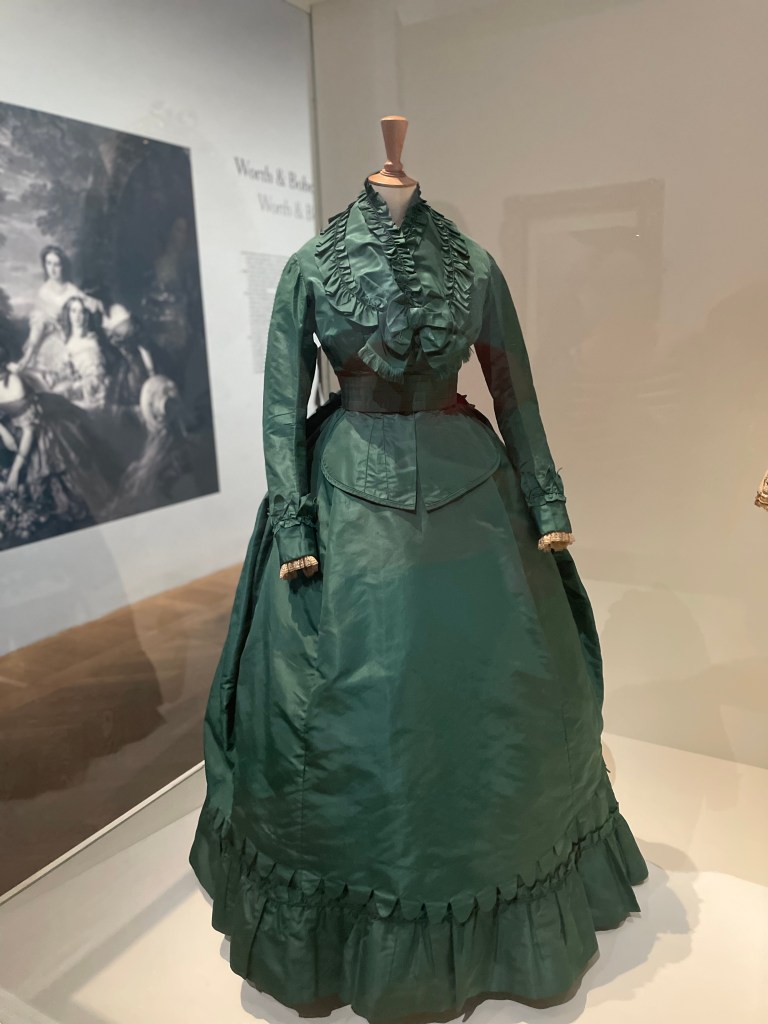
1868-1869
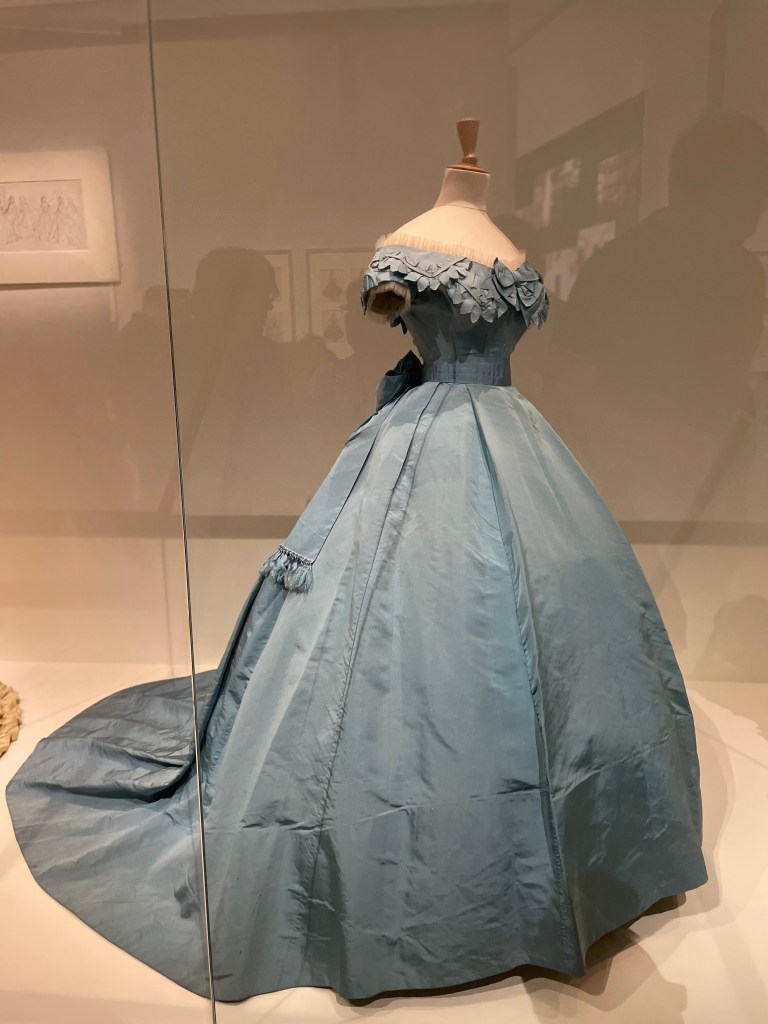
1866 – 1867
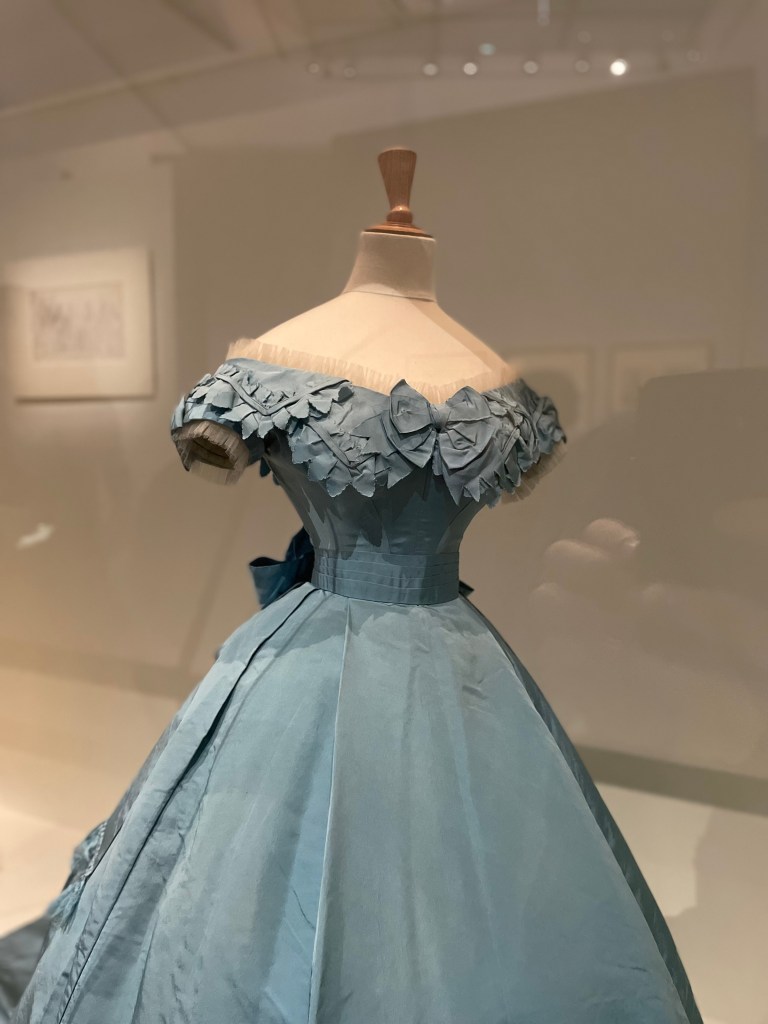
1866 – 1867
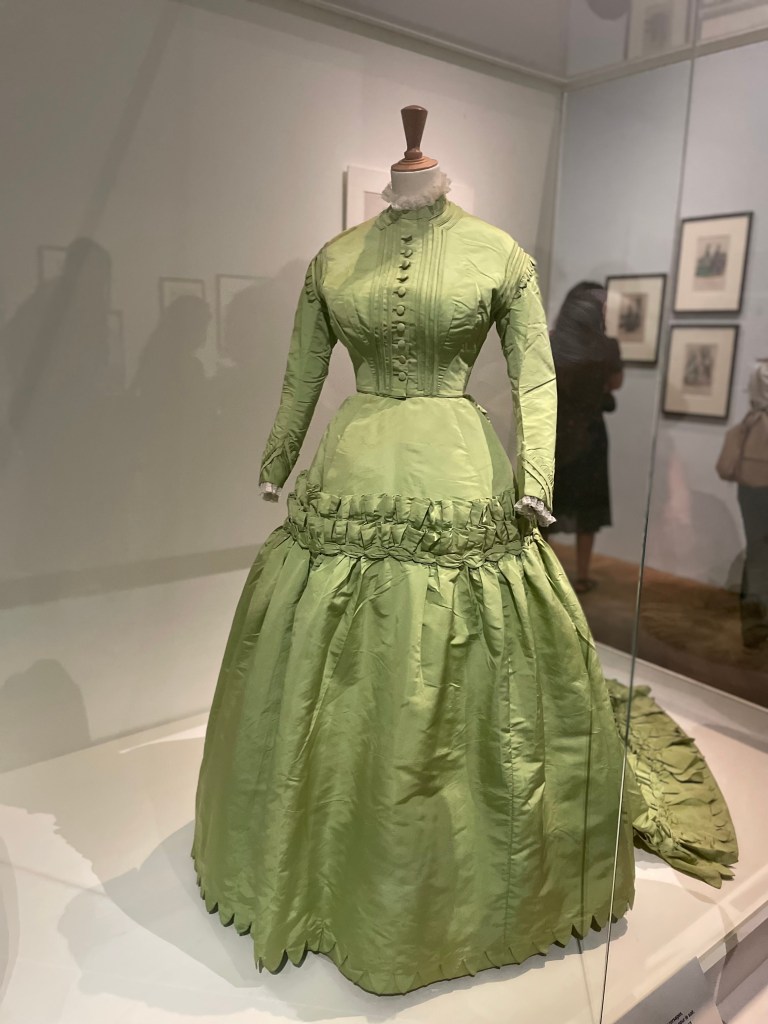
1866 – 1868
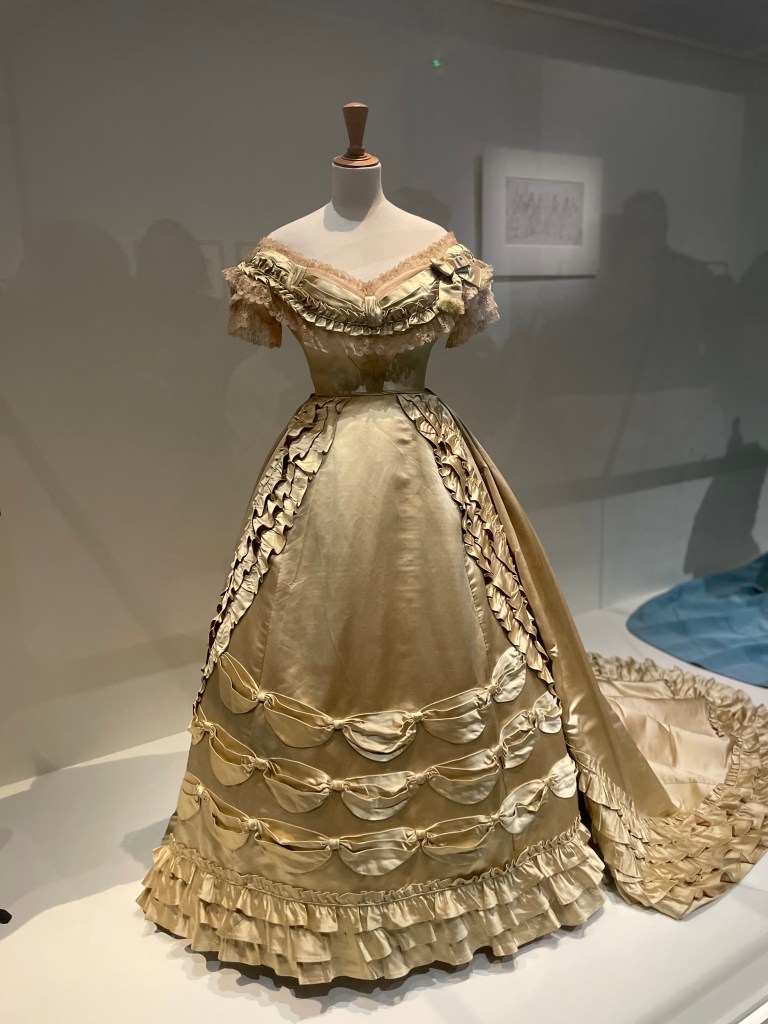
1866 – 1868
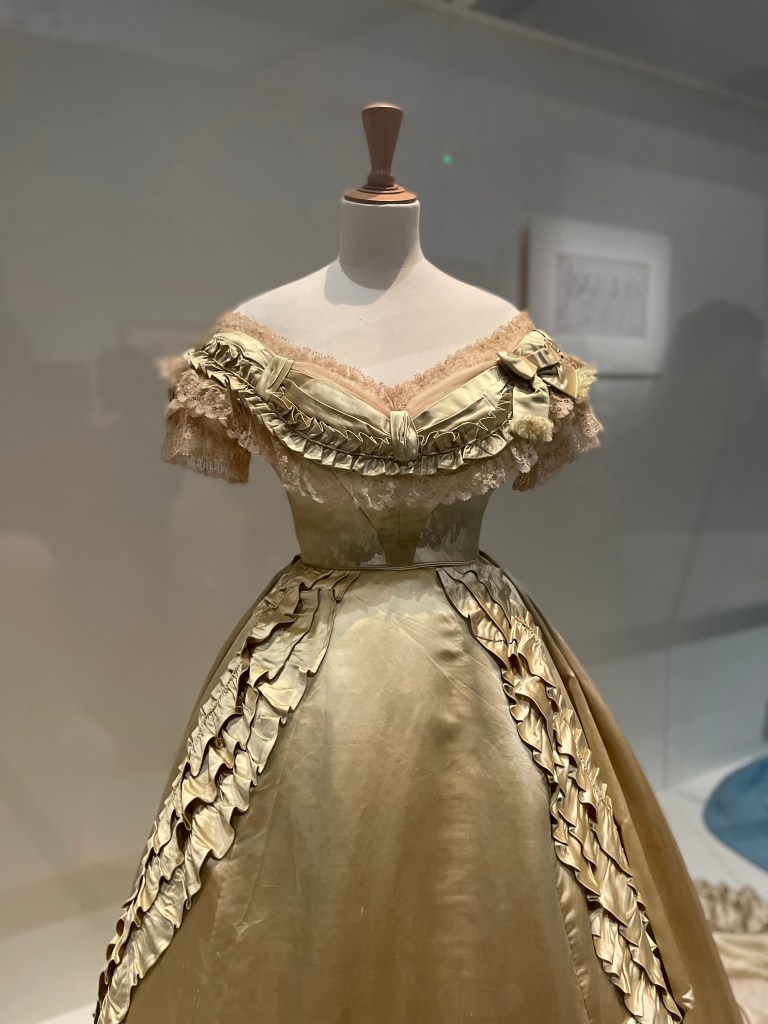
1866 – 1868
- FROM WORTH & BOBERGH TO WORTH
Nach dem Ende seiner Partnerschaft mit Otto Bobergh im Jahr 1870 erlebte Charles Frederick Worth dank des wirtschaftlichen Aufschwungs und der Weltausstellung 1878 einen neuen Höhepunkt. Trotz hoher Preise strömten Bestellungen aus aller Welt, und das Label Worth wurde zum Symbol für Luxus und modische Autorität. Unterstützt von seinen Söhnen prägte er den prunkvollen „Upholstery“-Stil mit aufwendig verzierten Kleidern aus Seide, Samt, Damast und Brokat. Die Krinoline wich der Tournüre, die mit Schleifen, Stofflagen und langen Schleppe die Silhouette neu definierte.
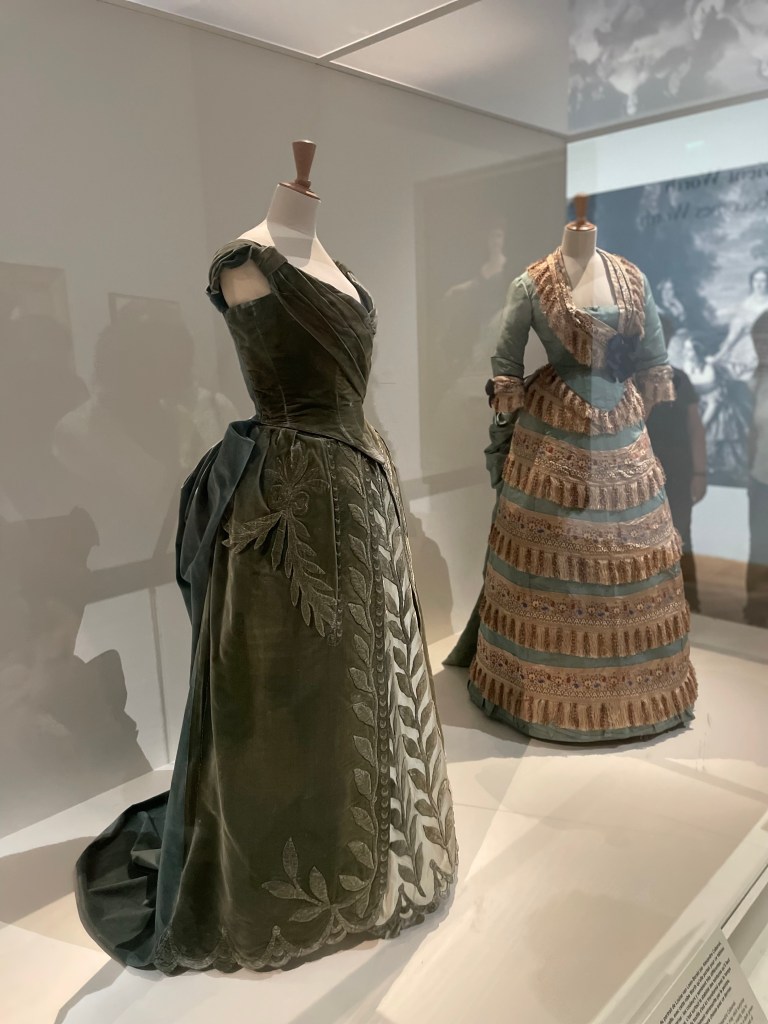
1872
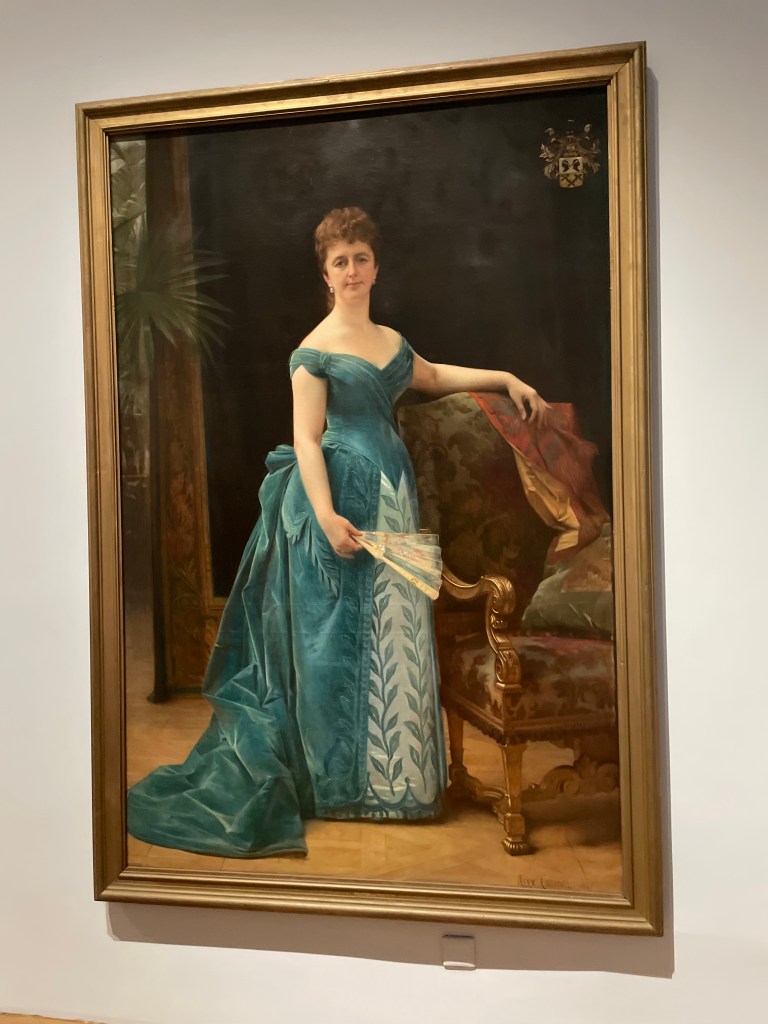
1887

1886
- 24 HOURS IN THE LIFE OF A WOMAN
Mit der Dritten Republik nach 1870 begann für das Haus Worth eine Zeit des Wohlstands und internationalen Erfolgs. Aristokratie, Bürgertum, Schauspielerinnen und wohlhabende Kundschaft aus aller Welt suchten die immer neuen Kreationen in der Rue de la Paix. Nach Charles Frederick Worths Tod 1895 führte sein Sohn Jean-Philippe die Tradition weiter: lange Schleppe, fließendere Silhouetten und prächtig verzierte Abendroben blieben Markenzeichen. Ergänzt wurden sie durch Teekleider in Prinzess-Linie sowie elegante Tages- und Sportkleider, Anzüge und Mäntel. Aufwendig dekorierte Abendmäntel und Capes sorgten für dramatische Effekte im künstlichen Licht.
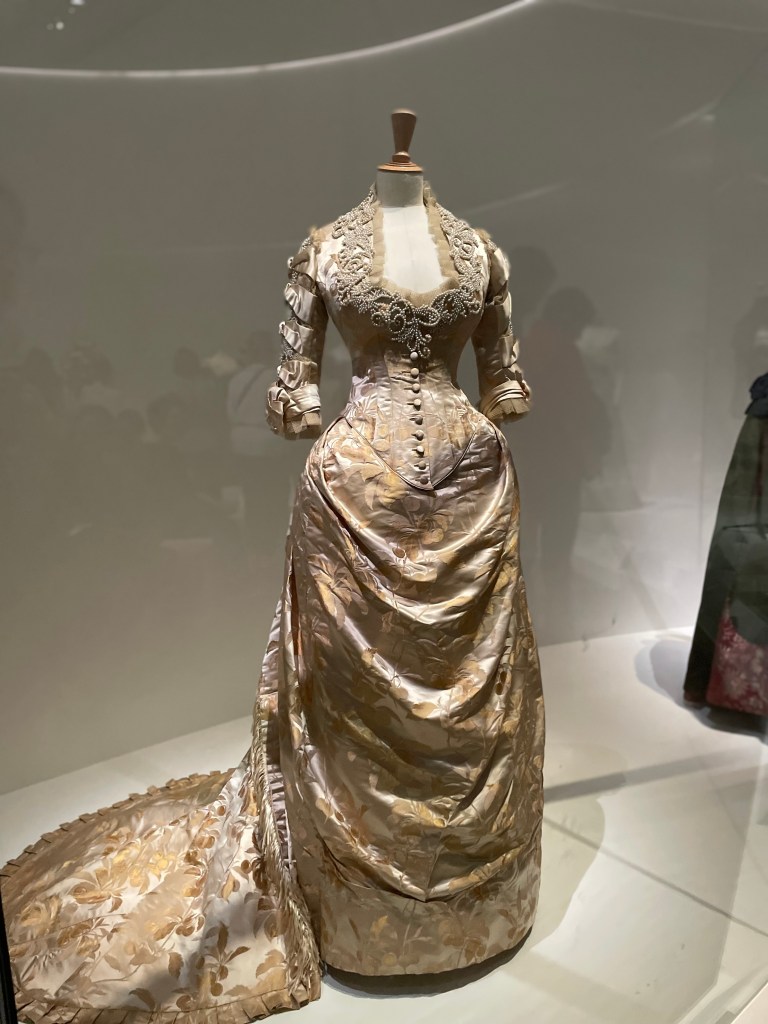
Hochzeitskleid 1878
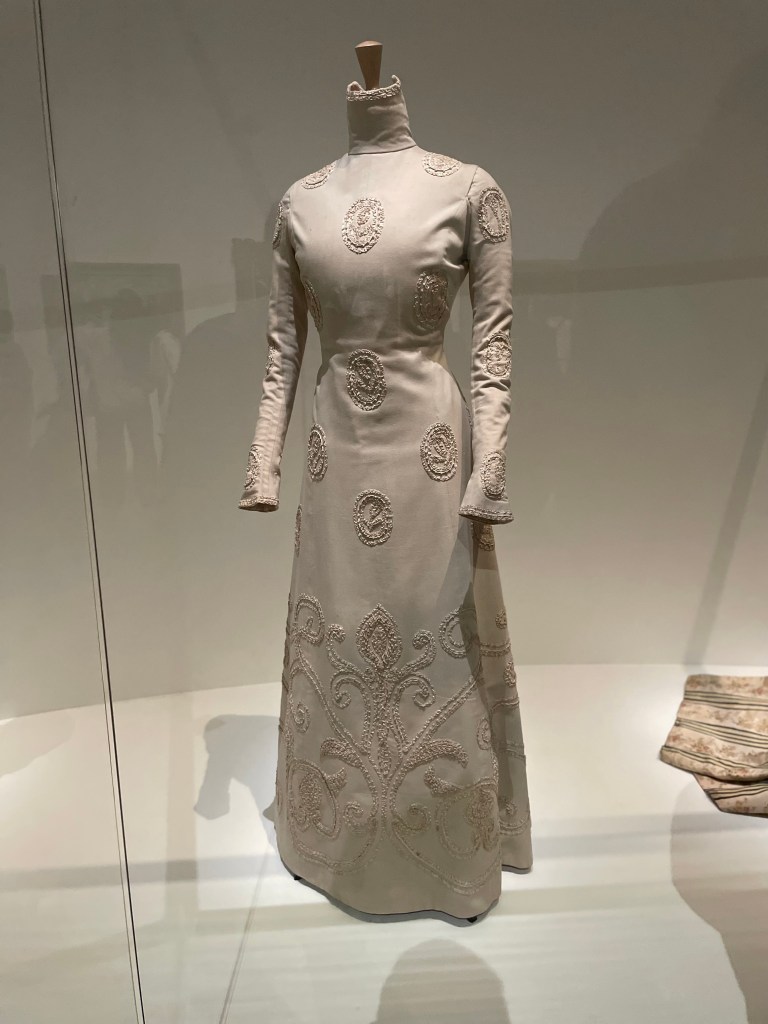
1895 – 1900
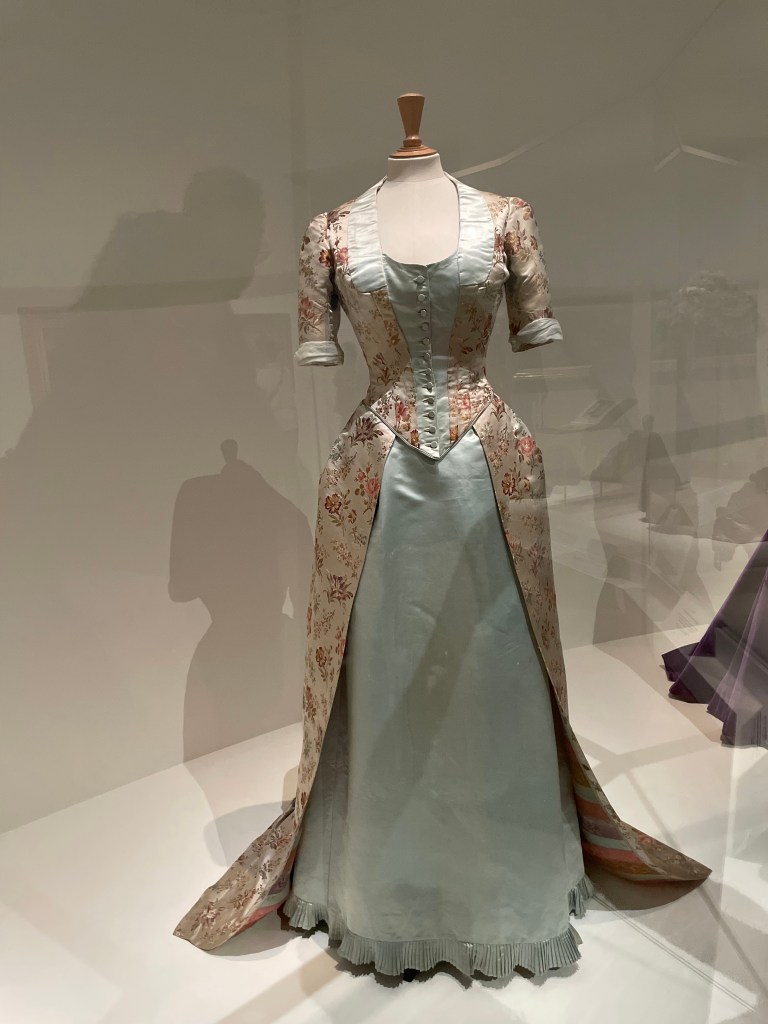
1885
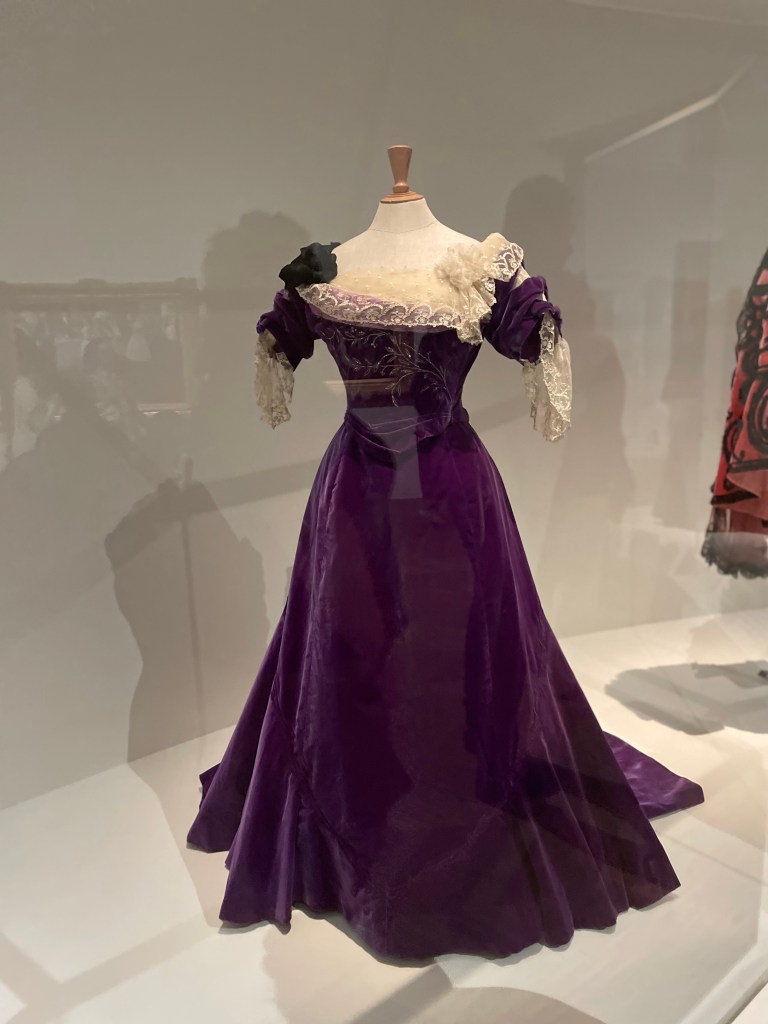
1901
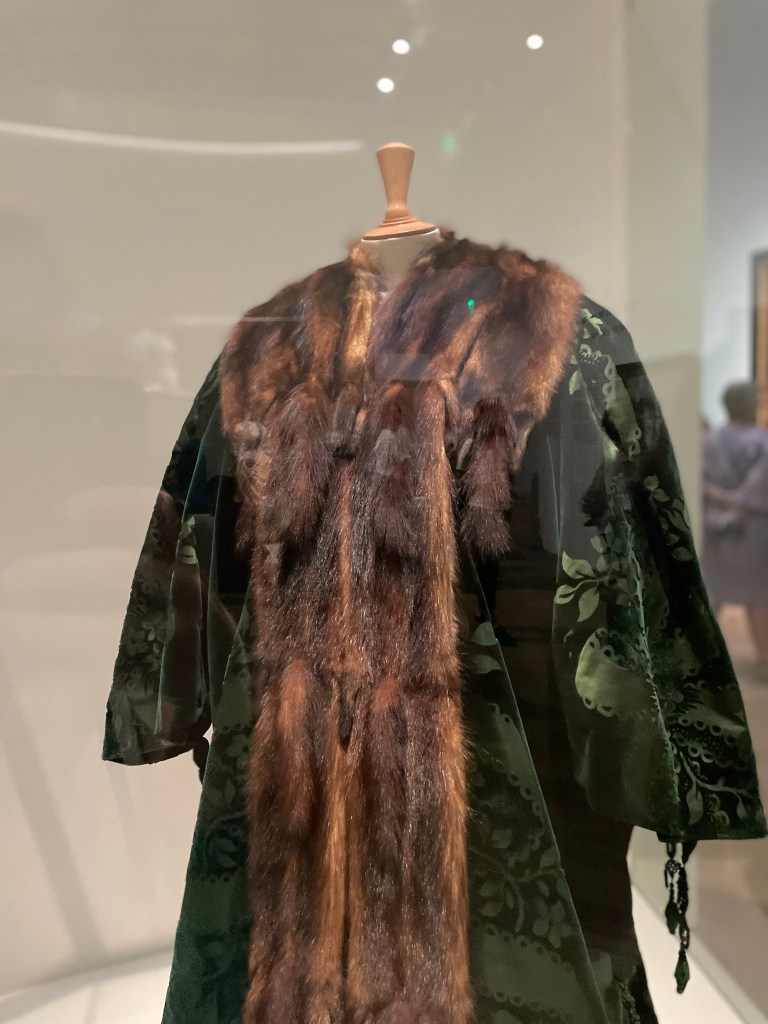
1901

1901
- HISTORICISM AND FANCY DRESS
Der historisierende Stil des späten 19. Jahrhunderts prägte Worths Kollektionen: Renaissance- und Rokoko-Elemente, Rüschen, Schleifen und Watteau-Falten zierten Teekleider, Abendroben und Opernmantel. Für prunkvolle Kostümbälle schöpfte er seine Kreativität voll aus, inspiriert von historischen Gemälden.
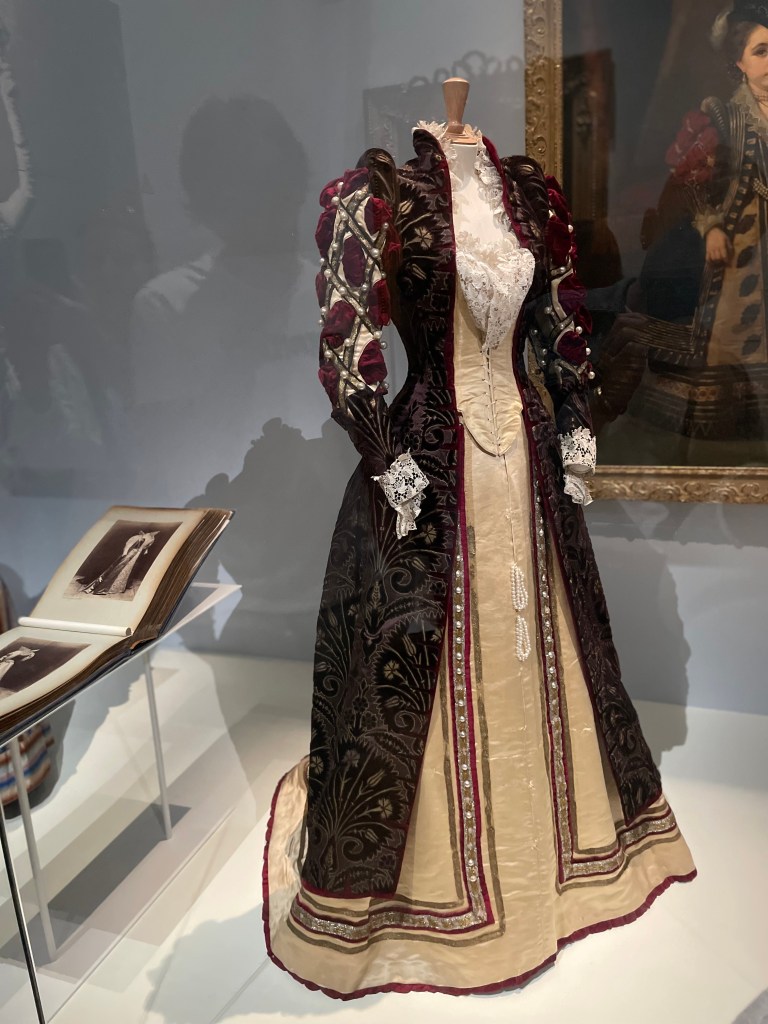
1883
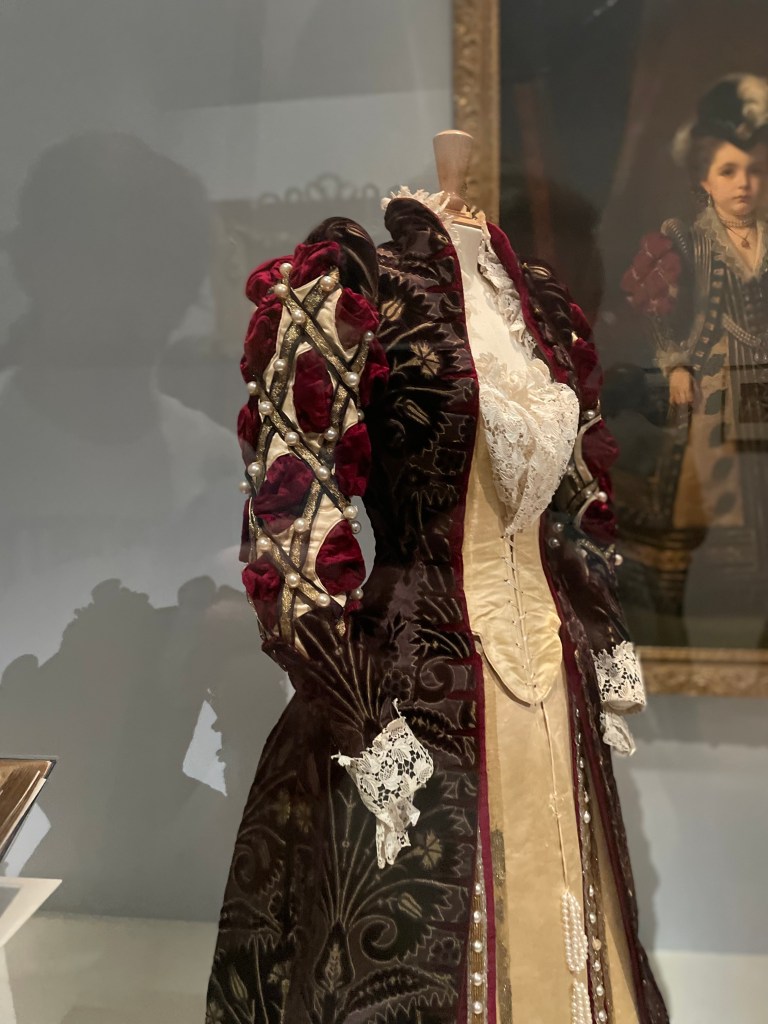
1883
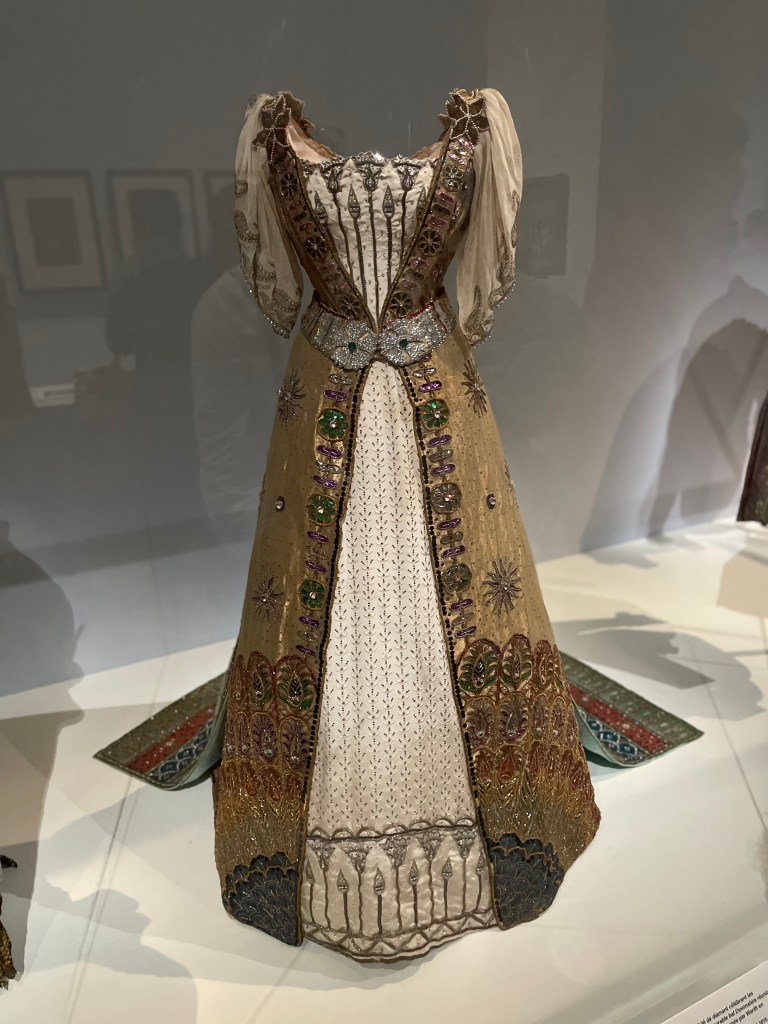
1897
- EXCEPTIONAL CLIENTS AND MOMENTS
Worths Kreationen waren bei Königen, Kaiserinnen und Aristokratie begehrt. Hochzeitskleider, Hofroben, Umhänge und Festkleider gehörten zu seinen Spezialitäten. Für Krönungen wie die von Kaiserin Elisabeth von Österreich 1867 oder den russischen Zaren 1883 und 1896 entwarf das Haus prächtige Ensembles, die zuvor in der Rue de la Paix ausgestellt wurden. Auch die Höfe Spaniens, Portugals und Großbritanniens zählten zu seinen Kunden. International bekannte Persönlichkeiten wie Franca Florio, Mary Victoria Leiter und die Gräfin Greffulhe trugen Worths Mode und spiegeln seinen Einfluss auf die weltweite Couture wider.
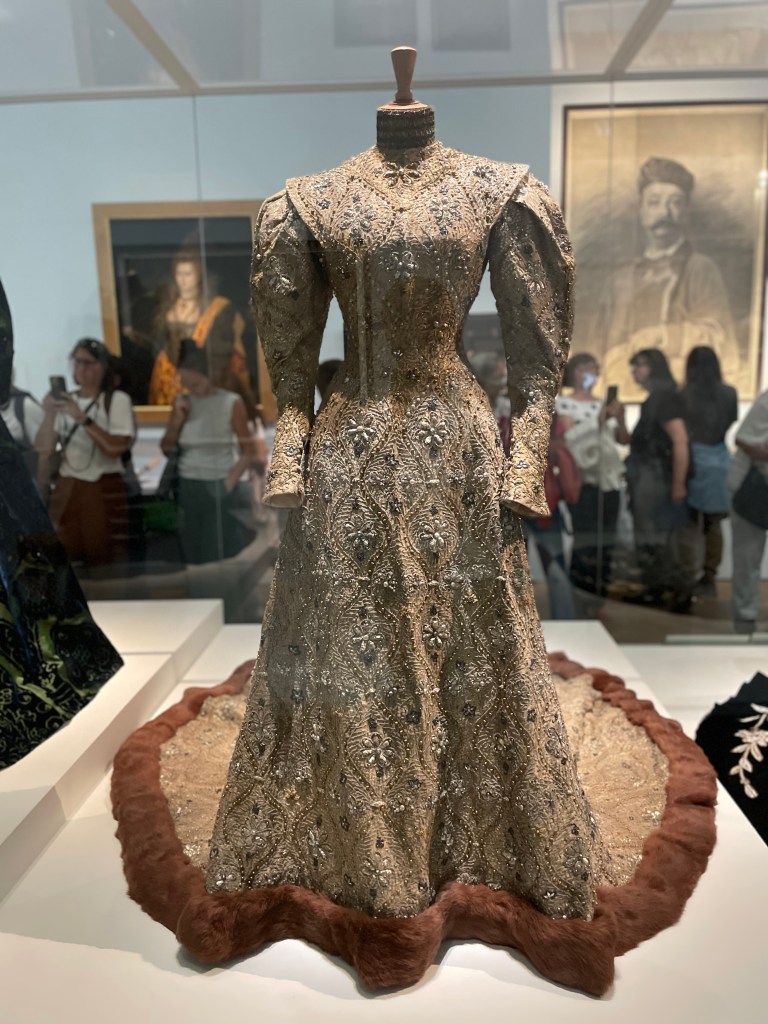
1904
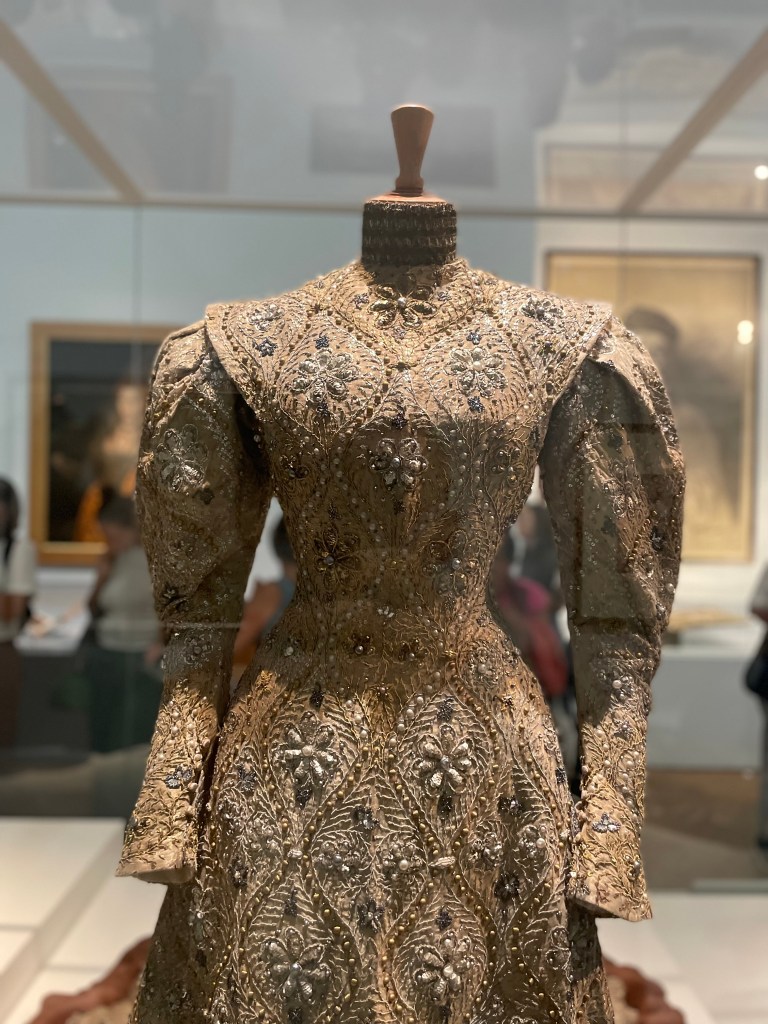
1904
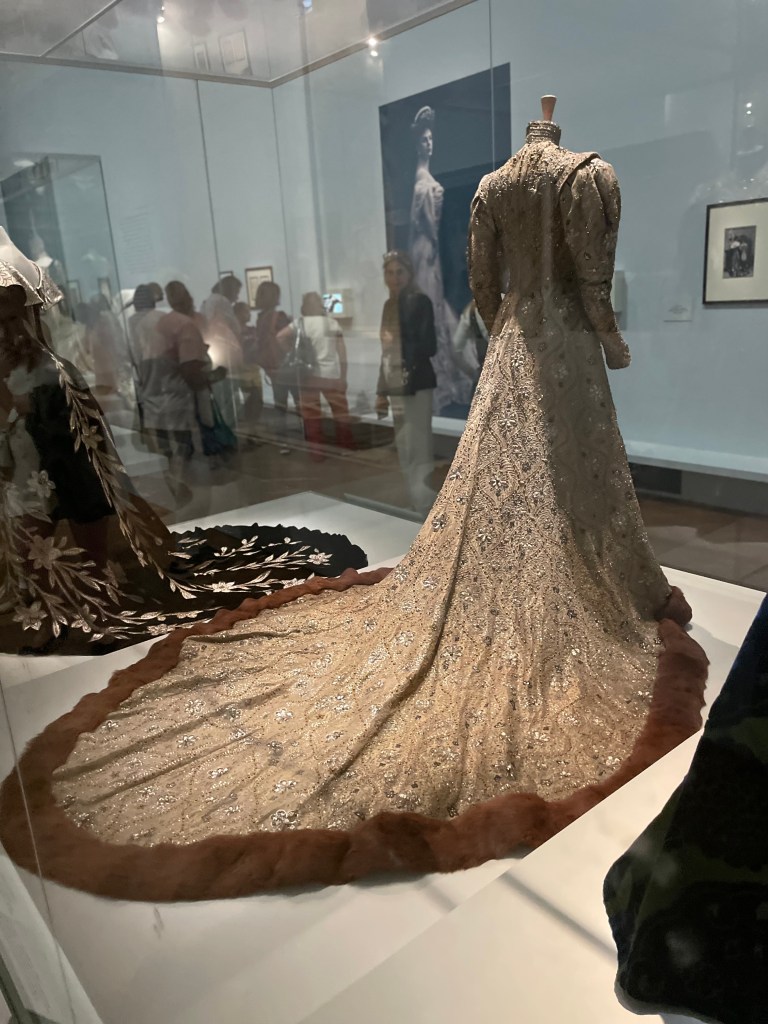
1904
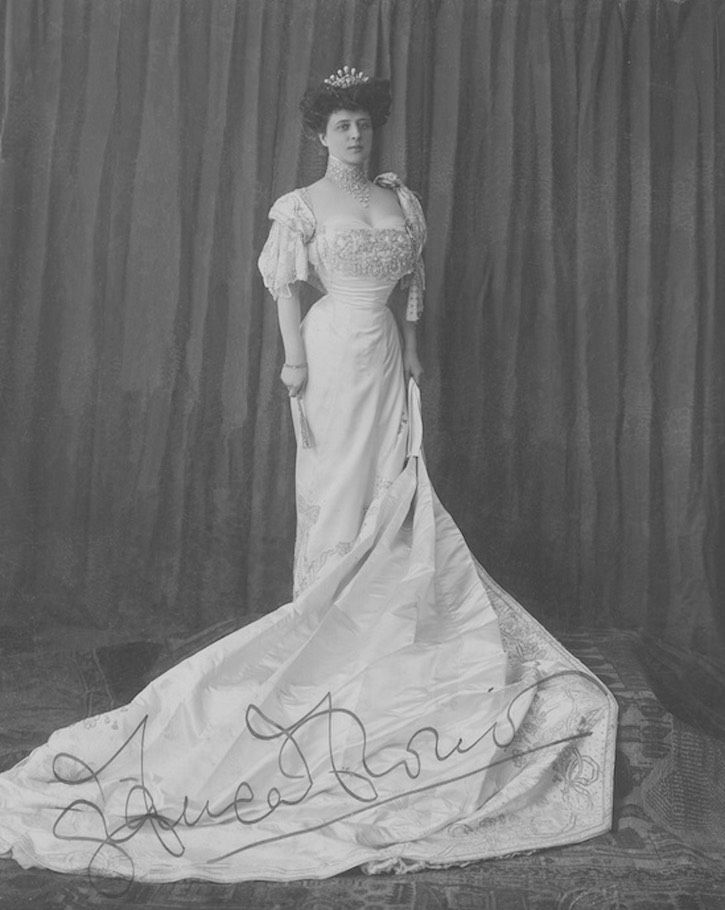
Franca Florio, 1902
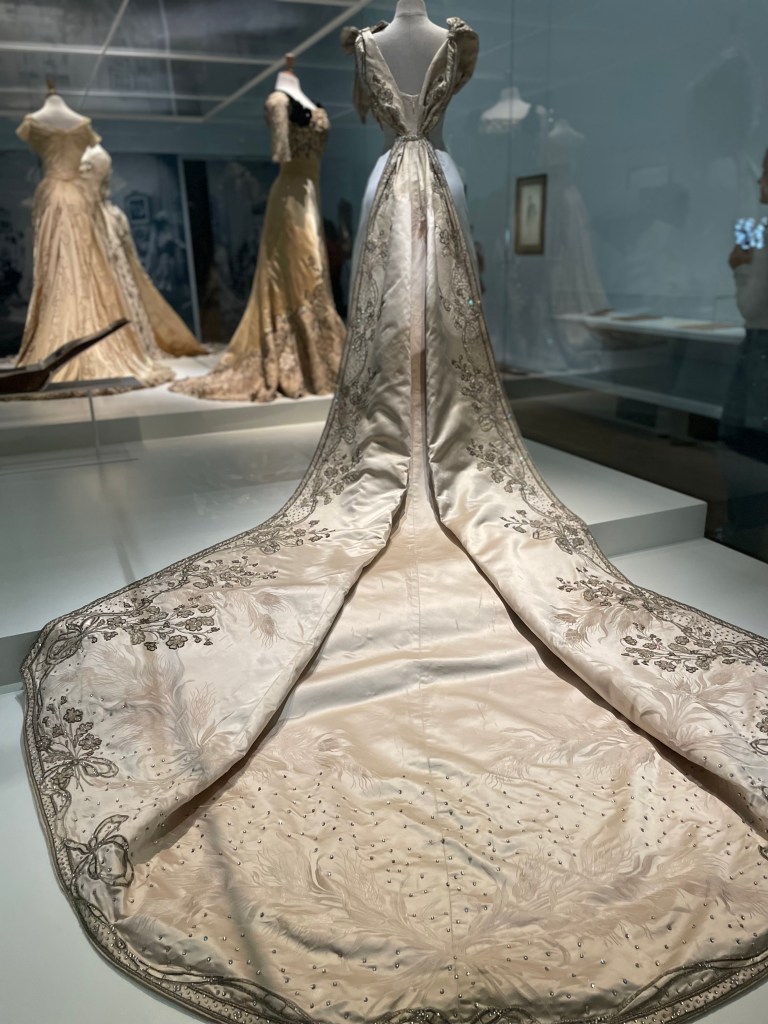
Franca Florio, 1902
- RUE DE LA PAIX – THE WORTH ATELIERS
Worths legendäres Salonsystem in der Rue de la Paix war das öffentliche Gesicht des Hauses, während die oberen Etagen die private Werkstatt beherbergten. Über acht Stockwerke arbeiteten Designer, Modelle, Schneider und Näherinnen Hand in Hand, um jährlich etwa 10.000 Kleidungsstücke herzustellen. In den Ateliers wurden Stoffe zugeschnitten, genäht und mit Passementerie, Bändern und Perlen verziert, sodass jedes Kleid nahezu einzigartig war. Die oberen Etagen enthielten Kantinen, Büros und Vorräte, im Dachboden wurde jede Kreation fotografiert, um das Design zu dokumentieren und vor Nachahmungen zu schützen.
- HONORABLE MENTIONS
Paul Poiret bei Worth
Gaston Worth engagierte den jungen Paul Poiret, um das Haus an die neuen Zeiten anzupassen. Zwischen 1901 und 1903 sammelte Poiret wertvolle Erfahrungen, die ihn später zu eigenem Erfolg führten. Besonders bemerkenswert ist die fließende, einfache Linie eines Kimono-Mantels, der die Silhouette auflockerte und neue, moderne Ideen in die Couture einbrachte.
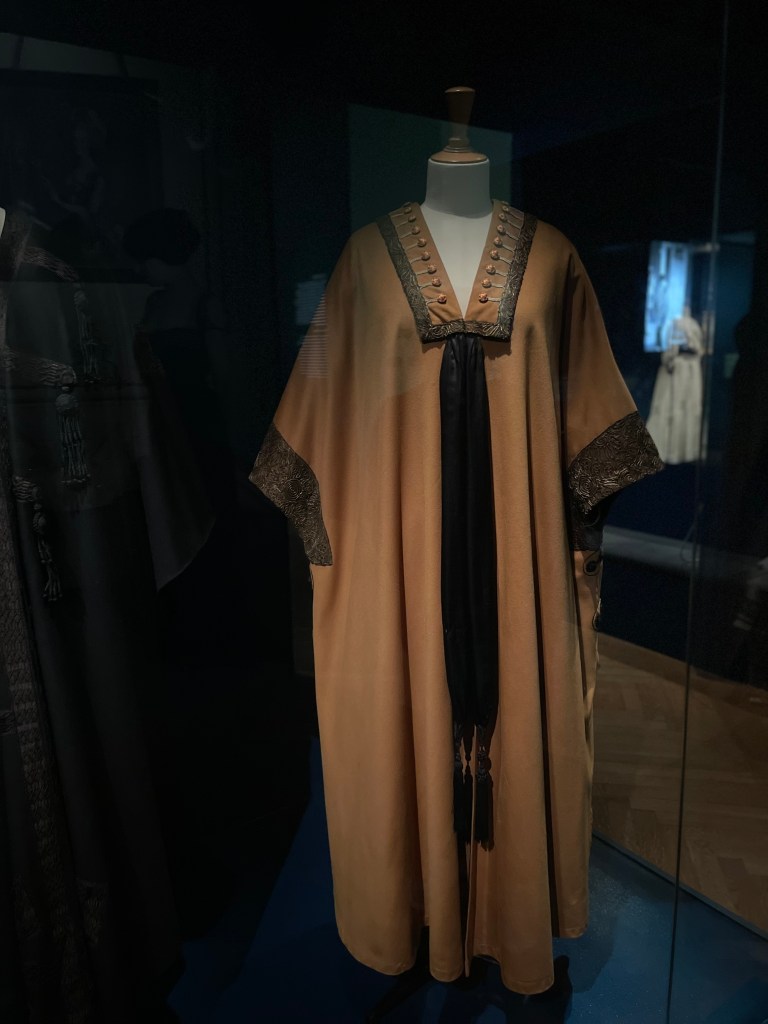
Kimono-Mantel
1912
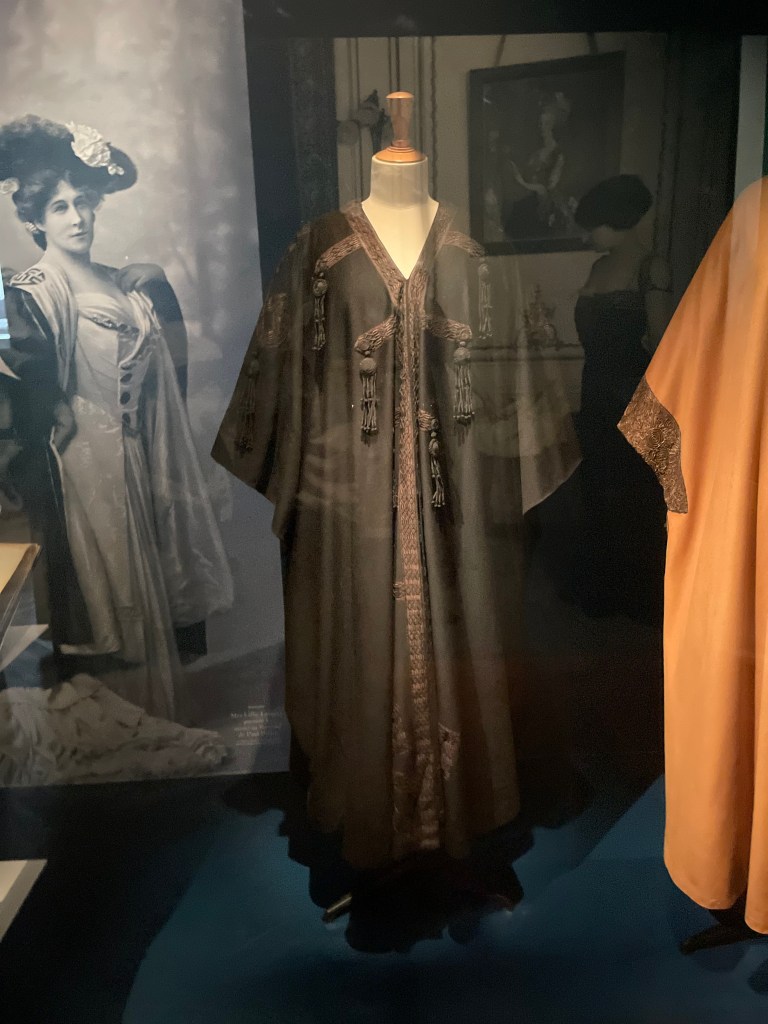
Kimono-Mantel
1910 – 1912
Louis Vuitton (1821–1892)
Louis Vuitton, ursprünglich Koffer- und Truhenmacher, eröffnete 1854 sein eigenes Haus in Paris. Um Worths Kreationen nach Übersee zu verschicken, entwickelte er den berühmten Wardrobe Trunk mit Hängesystem und Schubladen. Die enge Zusammenarbeit beider Häuser zeigt sich noch heute: Einige Vuitton-Koffer tragen Labels von House of Worth.
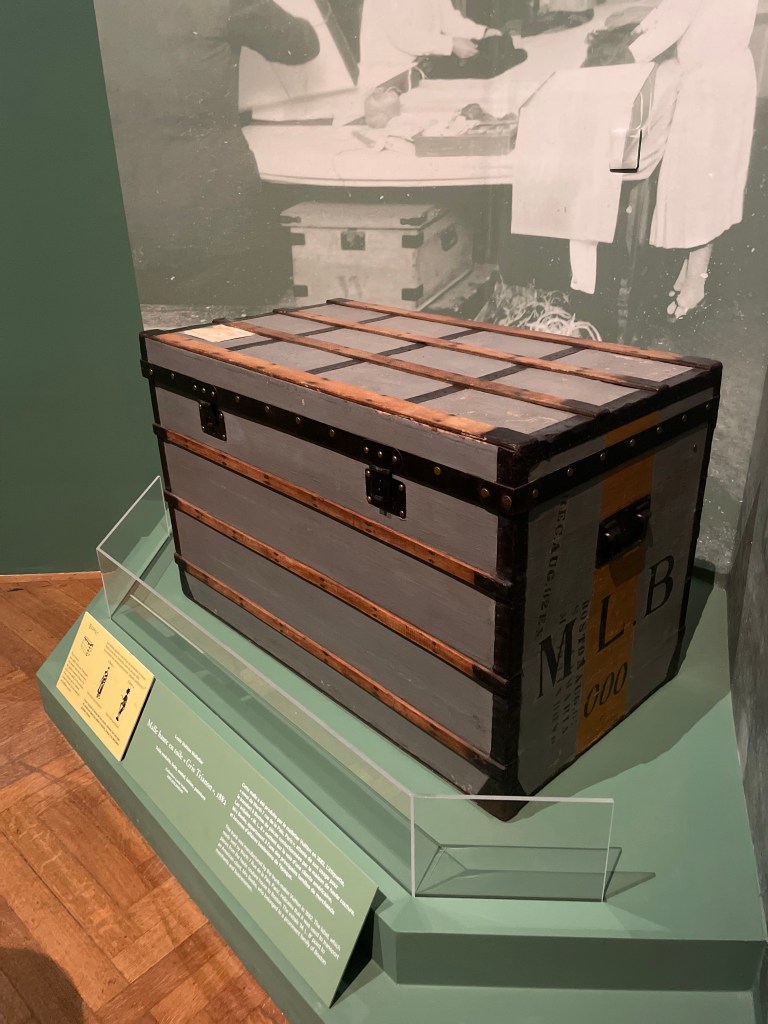
Wardrobe Trunk
- A NEW GOLDEN AGE. THE HOUSE OF WORTH AT THE DAWN OF THE 20TH CENTURY
Zu Beginn des 20. Jahrhunderts erlebte das Modehaus Worth großen Erfolg. Gaston Worth zog Aristokratie, Kunstwelt und Theaterstars an und setzte auf elegante, gerade Silhouetten im Stil des Ersten Kaiserreichs. Während des Ersten Weltkriegs engagierte sich das Haus wohltätig und wandelte sich zeitweise sogar in ein Krankenhaus.
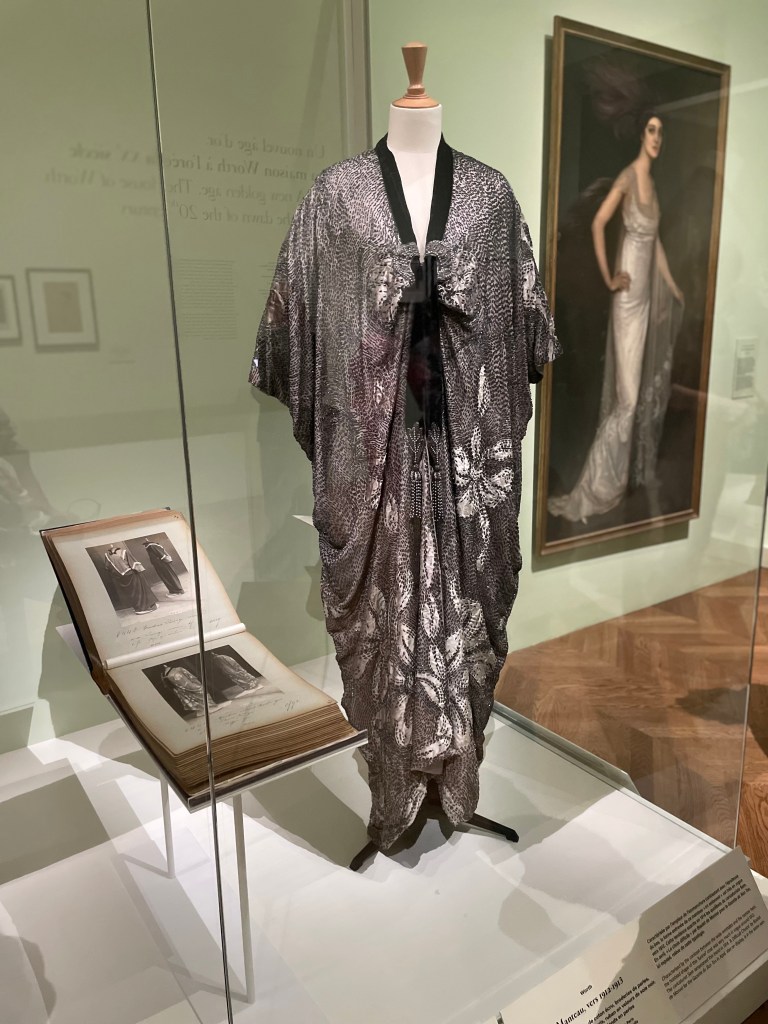
1912 – 1913
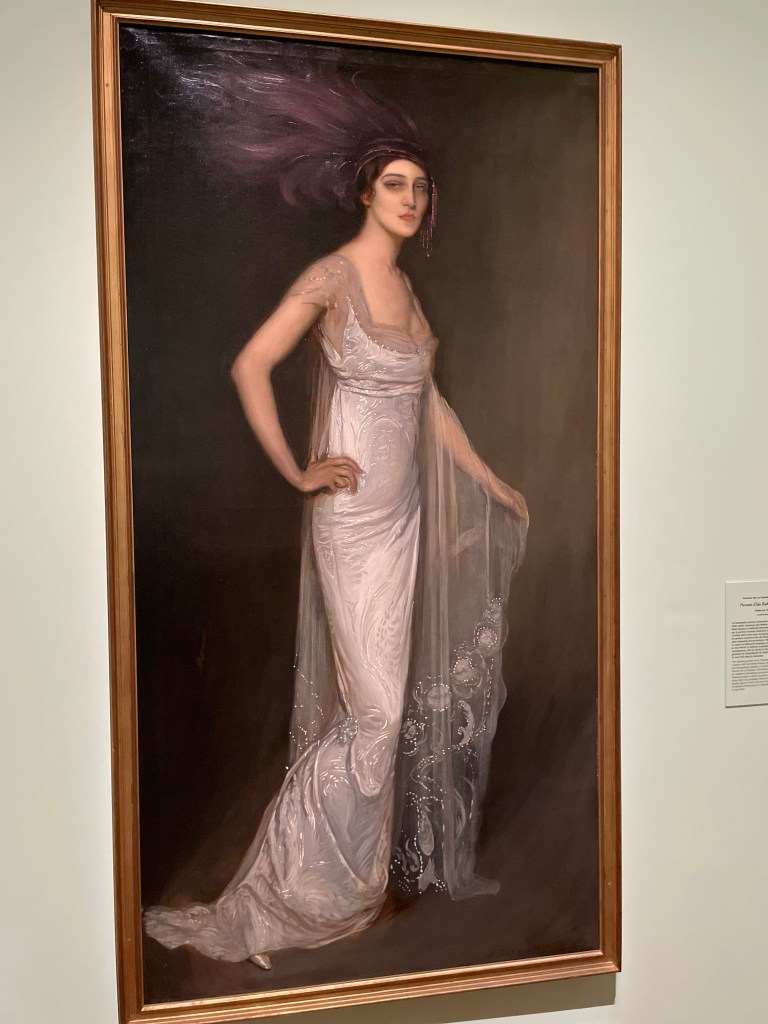
1913
- THE 1920S
Worth, eines der ältesten Modehäuser, verband Tradition und Moderne. Unter Gaston Worths Söhnen Jean-Charles und Jacques entstanden Kollektionen voller Mäntel, Capes und Abendkleider, oft in „Worth-Blau“, mit opulenter Stickerei, trompe-l’œil-Details und Art-Déco-Motiven, die die Modelle zu Kunstobjekten machten. Jean-Charles arbeitete eng mit Künstlern wie Jean Dunand und Raoul Dufy zusammen und ergänzte 1929 viele Entwürfe mit seinem Monogramm.
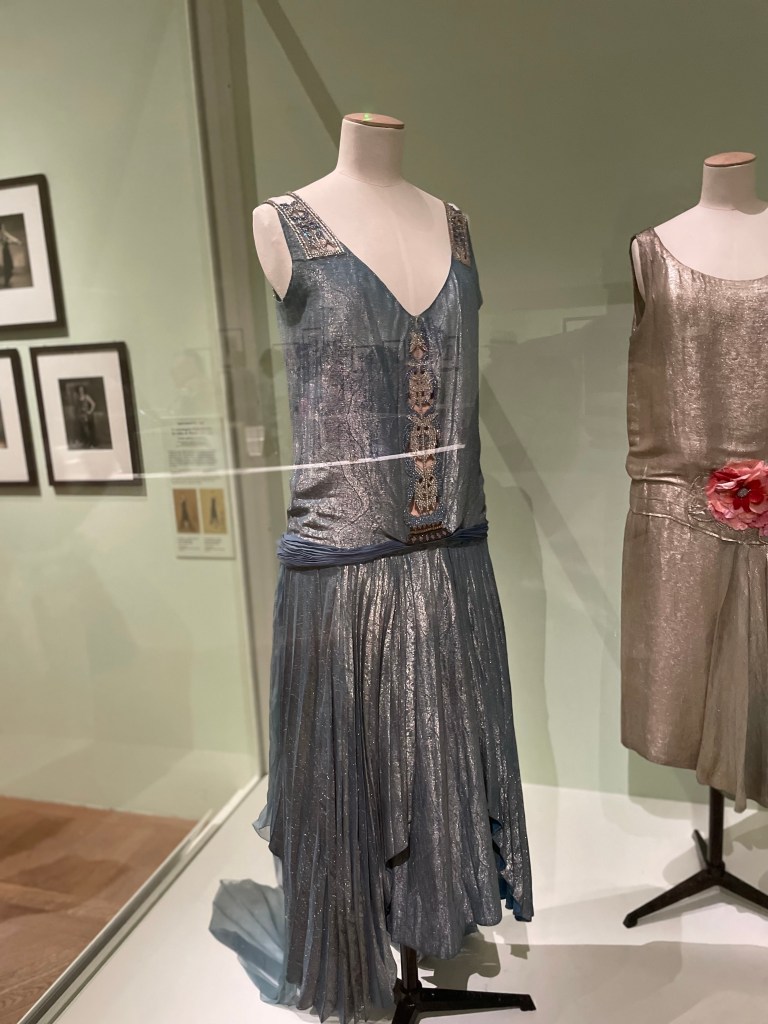
„Worth Blue“ 1925
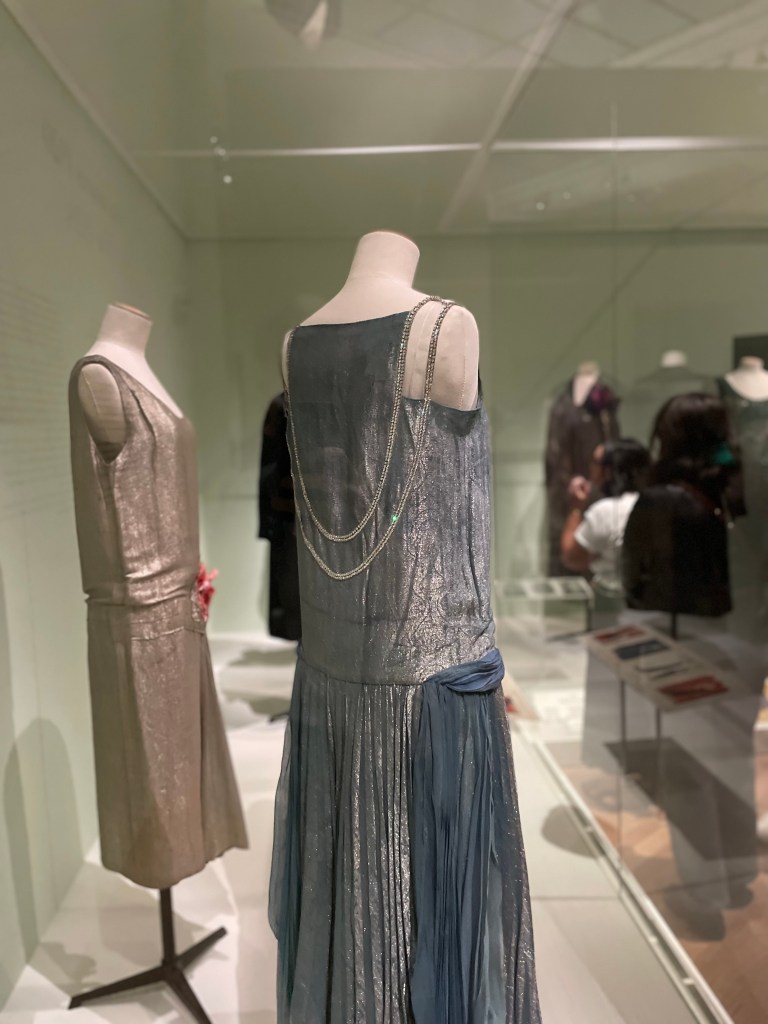
„Worth Blue“ 1925
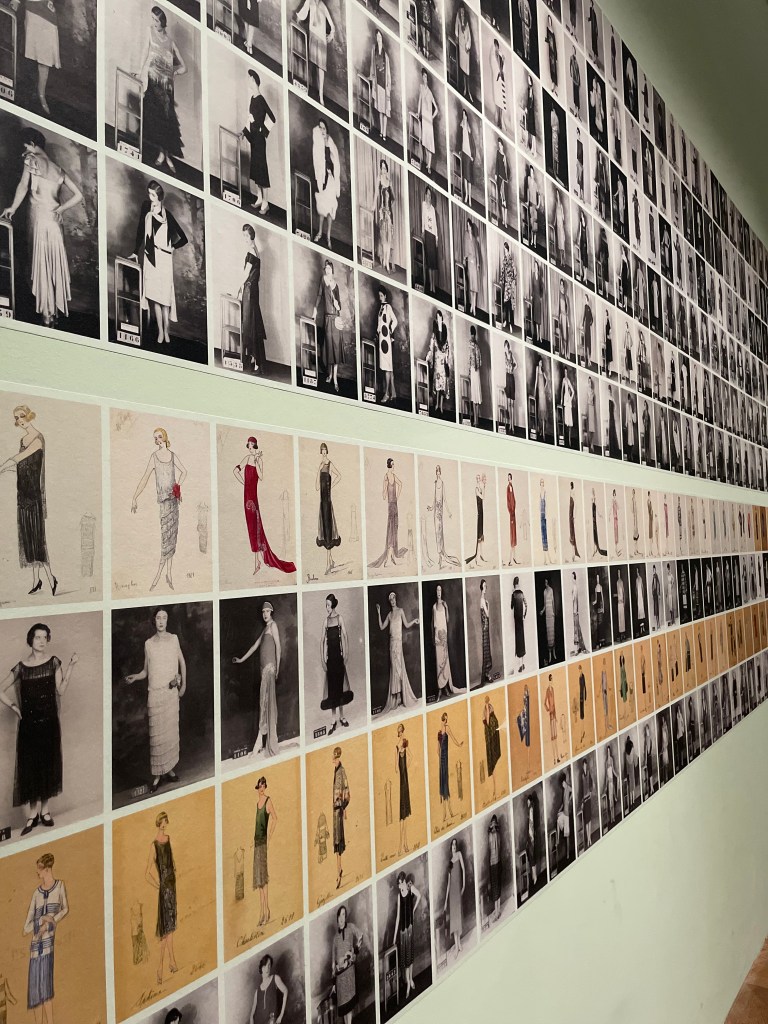
1920s
Mir hat besonders die Vielfalt der ausgestellten Kleider gefallen, ebenso wie der beeindruckende Rahmen des Petit Palais. Leider war das Museum sehr voll, die Ausstellung wirkte wenig kuratiert und mit Atmosphäre, Licht oder Stimmung wurde kaum gearbeitet. Auch die kleinen Bildschirme für Filmclips konnten die Präsentation nur begrenzt unterstützen.
Dennoch war die Ausstellung inspirierend und zeigt modehistorisch sehr umfassend die Arbeit von Worth.
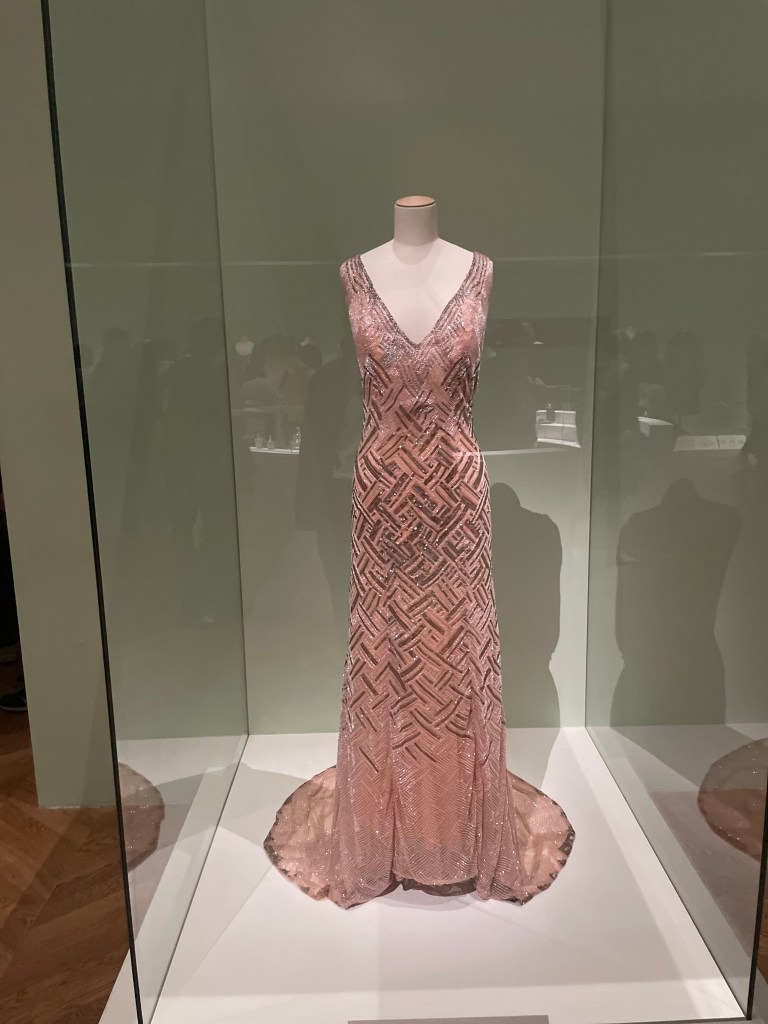
Abendkleid aus dem Jahr 1936
__________________________________________________________________________________
English Version
Charles Frederick Worth x Petit Palais
An exhibition dedicated to the fashion house House of Worth. Founded in 1858 by Charles Frederick Worth, the pioneer of haute couture, it allows visitors to follow the history of haute couture through the decades.
Haute couture, literally translated as “high sewing art,” refers to the custom-made creation of unique collections from the finest materials – the pinnacle of exclusivity, creativity, and masterful craftsmanship. But haute couture is more than just a term: it is a legally protected title, which since 1945 may only be used by fashion houses that meet the strict requirements of the Fédération de la Haute Couture et de la Mode (FHCM).
1825 – Charles Frederick Worth was born on November 13 in Lincolnshire, England. From an early age, he showed a talent for fabrics and tailoring, which he initially developed while working in various cloth shops in London.
1845 – Worth moved to Paris, the center of fashion and luxury, to begin his career as a tailor.
1851 – At the first World’s Fair in London, the famous Great Exhibition, Worth was awarded a gold medal for his designs. Four years later, at the 1855 Paris World’s Fair, he presented an off-the-shoulder coat (Manteau de cour), which earned him first prize.
1858 – Together with Otto Bobergh, he founded Maison Worth et Bobergh on the Rue de la Paix in Paris, a fashion house that combined bespoke clothing with its own collections. Worth was the first couturier to organize fashion shows with live models to showcase his designs.
He designed clothing for some of the wealthiest women in Europe, including Empress Eugénie of France and Empress Elisabeth of Austria, turning fashion into a form of art and theatrical presentation.
Empress Eugénie of France
Franz Xaver Winterhalter, 1854Empress Elisabeth of Austria
Porträt von Franz Xaver Winterhalter, 18651895 – Charles Frederick Worth died on March 10 in Paris, but his fashion house continued to operate until 1956.
The Exhibition
From May 7 to September 7, 2025, the Petit Palais, Musée des Beaux-Arts de la Ville de Paris, will present the exhibition „WORTH – Inventing Haute Couture“ Spread over 1,100 square meters, it will showcase more than 400 works, including fashion, accessories, art objects, paintings, and graphics, with loans from the Philadelphia Museum of Art, Metropolitan Museum of Art, Victoria and Albert Museum, Palazzo Pitti, as well as from private collections. To see all the images, feel free to click the following link and visit my Pinterest profile.
The overall curation of the exhibition is led by Annick Lemoine from the Petit Palais and Miren Arzalluz from the Palais Galliera. The scientific curation is managed by Sophie Grossiord, Marine Kisiel, and Raphaële Martin-Pigalle, who are affiliated with both the Petit Palais and the Palais Galliera.
I visited the exhibition on September 6 and spent approximately 90 minutes at the Petit Palais. Below, I am sharing images that chronologically reflect the different eras.
Of course, these images and my personal impressions cannot replace a visit to the museum.
- WORTH & BOBERGH
In 1858, he founded the house of Worth & Bobergh on the Rue de la Paix, just steps away from the imperial court. Princess von Metternich and, soon after, the Empress herself brought his creations into the spotlight. At first, most gowns were designed in simple, solid colors, before Worth revolutionised fashion with his redesigned crinoline, sumptuous silks from Lyon and magnificent dresses adorned with lace, embroidery and trimmings. In doing so, he defined the style of the Second Empire and secured his place as a leading figure of Parisian couture.
1868-1869
1866 – 1867
1866 – 1867
1866 – 1868
1866 – 1868
1866 – 1868
- FROM WORTH & BOBERGH TO WORTH
After ending his partnership with Otto Bobergh in 1870, Charles Frederick Worth entered a new golden era, fuelled by France’s prosperity and the World’s Fair of 1878. Despite his high prices, orders came from across the globe, making the Worth label a byword for luxury and fashion authority. Supported by his sons, he defined the lavish “upholstery” style, with gowns richly decorated in silks, velvets, damasks and brocades. The crinoline gave way to the bustle, which, adorned with bows, layers of fabric and trailing trains, reshaped the female silhouette.
1872
1887
1886
- 24 HOURS IN THE LIFE OF A WOMAN
With the advent of the Third Republic after 1870, the House of Worth entered a period of prosperity and international acclaim. Aristocrats, the bourgeoisie, actresses and wealthy clients from abroad flocked to its ever-evolving creations on the Rue de la Paix. After Charles Frederick Worth’s death in 1895, his son Jean-Philippe carried on the legacy: long trains, more fluid silhouettes and richly embellished evening gowns remained its hallmarks. The collection also expanded to include tea gowns in the princess line, as well as stylish day and sports dresses, suits and coats. Dramatically adorned evening coats and capes shimmered spectacularly in artificial light.
Wedding dress 1878
1895 – 1900
1885
1901
1901
1901
- HISTORICISM AND FANCY DRESS
Worth’s late 19th-century collections were shaped by historicising styles: Renaissance and Rococo elements, ruffles, bows and Watteau pleats adorned tea gowns, evening dresses and opera coats. For lavish costume balls, he drew freely on his creativity, inspired by historical paintings.
1883
1883
1897
- EXCEPTIONAL CLIENTS AND MOMENTS
Worth’s creations were highly prized by royalty and aristocracy. Wedding gowns, court robes, cloaks and formal dresses were among his specialties. For coronations such as Empress Elisabeth of Austria in 1867 and the Russian tsarinas in 1883 and 1896, his ensembles were displayed in Rue de la Paix before being sent to their courts. Worth also served the royal houses of Spain, Portugal and Britain. International figures like Franca Florio, Mary Victoria Leiter and Countess Greffulhe wore his designs, illustrating his far-reaching influence on global couture.
1904
1904
1904
Franca Florio, 1902
Franca Florio, 1902
- RUE DE LA PAIX – THE WORTH ATELIERS
Worth’s legendary suite of salons on Rue de la Paix represented the public face of the house, while the upper floors housed the private workshops. Across eight stories, designers, models, tailors and seamstresses worked together to produce around 10,000 garments annually. Fabrics were cut, sewn, and adorned with passementerie, ribbons and beads, making each piece virtually unique. The upper floors contained kitchens, offices and supplies, and in the attic, each creation was photographed to document the design and protect it from imitation.
- HONORABLE MENTIONS
Paul Poiret at Worth
Gaston Worth hired the young Paul Poiret to modernize the house. From 1901 to 1903, Poiret gained valuable experience that later led to his own success. Notably, his flowing, simple kimono-style coat introduced a fresh, modern line to couture.
Kimono coat
1912
Kimono coat
1910 – 1912
Louis Vuitton (1821–1892)
Louis Vuitton, originally a trunk maker, opened his own workshop in Paris in 1854. To ship Worth’s creations across the Atlantic, he designed the famous wardrobe trunk with hanging space and drawers. The close collaboration of the two houses is still evident today, as some Vuitton trunks carry House of Worth labels.
Wardrobe Trunk
- A NEW GOLDEN AGE. THE HOUSE OF WORTH AT THE DAWN OF THE 20TH CENTURY
At the start of the 20th century, Worth flourished, attracting aristocrats, artists, and theatre stars with elegant, straight Empire-style silhouettes. During World War I, the house engaged in charity and even served as a hospital for a time.
1912 – 1913
1913
- THE 1920S
Worth, one of the oldest fashion houses, combined tradition with modernity. Under Gaston Worth’s sons, Jean-Charles and Jacques, the house produced collections of coats, capes, and evening gowns, often in “Worth Blue”, featuring lavish embroidery, trompe-l’œil details, and Art Deco motifs that elevated the designs to works of art. Jean-Charles collaborated with artists like Jean Dunand and Raoul Dufy, and in 1929 he began adding his monogram to many creations.
„Worth Blue“ 1925
„Worth Blue“ 1925
1920s
I particularly enjoyed the variety of dresses on display, as well as the impressive setting of the Petit Palais. Unfortunately, the museum was very crowded, the exhibition felt somewhat uncurated, and little attention was given to atmosphere, lighting, or mood. The small screens for film clips also limited the experience.
Nonetheless, the exhibition was inspiring and provides a very comprehensive view of Worth’s work from a fashion-historical perspective.
Evening dress from 1936
 FABILEUX